In H1 2026, the industry developed amid mixed external market conditions. On the one hand, global textile trade was gradually recovering. On the other hand, consumer demand for clothing remained subdued, while price competition intensified.
Against this backdrop, Uzbekistan continues to strengthen its position as the region’s leading textile and garment hub, demonstrating growth in textile production and faster expansion of finished-product exports. Meanwhile, other Central Asian countries continue to differ in their industry specialization, ranging from garment manufacturing and re-export trade to the processing and export of cotton raw materials.
Uzbekistan’s Textile and Garment Industry
In H1 2026, combined textile and apparel output reached 73.4 trillion sums ($6.1 billion), increasing by 7.4%. In particular, textile production reached 54.4 trillion sums ($4.5 billion), up 10.1%, while apparel production amounted to 19 trillion sums ($1.6 billion). However, real growth in apparel production slowed to just 0.4% over the period under review, compared with 15% growth in the Q1. The garment subsector therefore essentially maintained its previous production level but continued to lag significantly behind the textile segment.
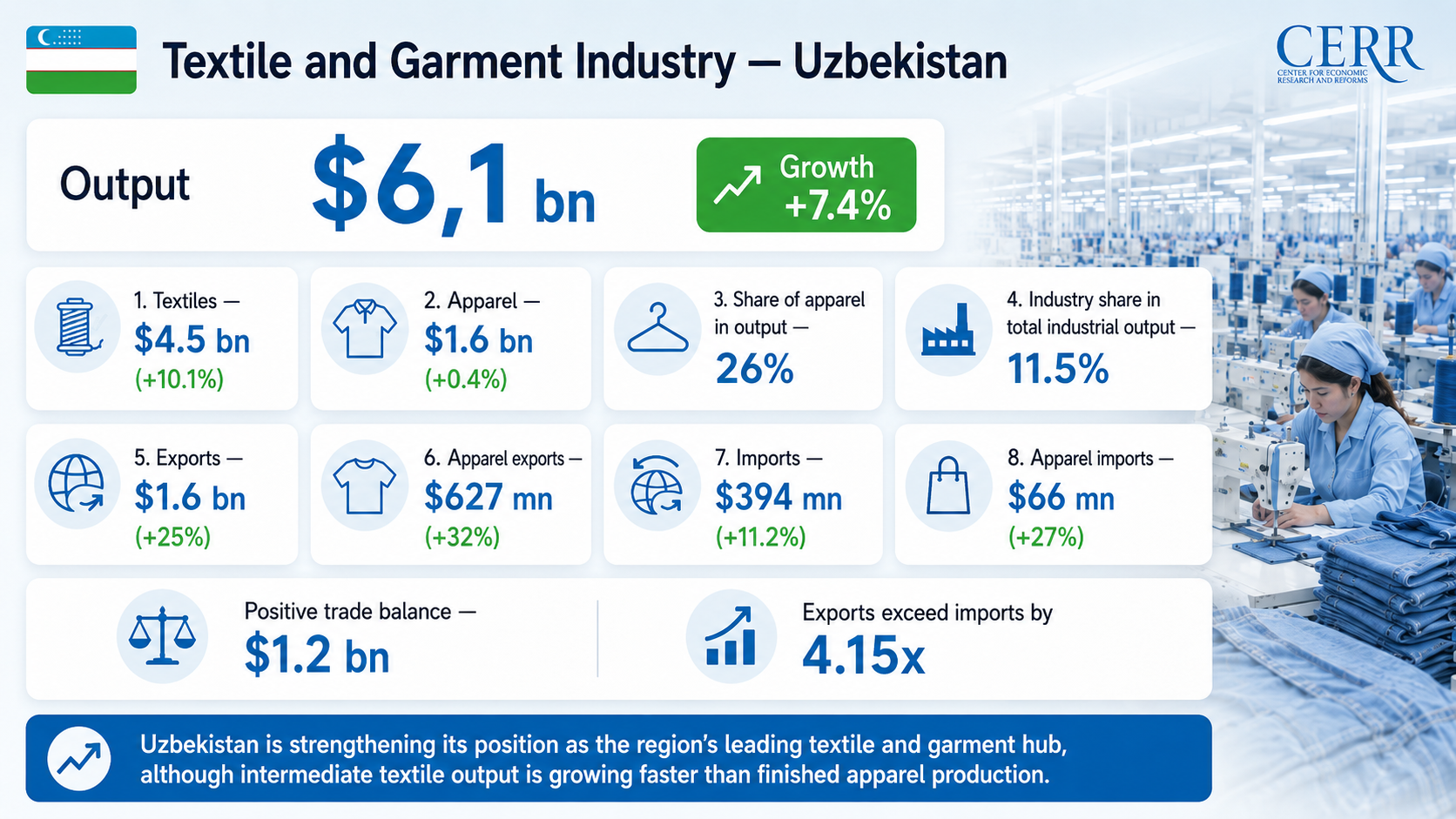
The share of apparel in the industry’s total output declined from 30% in 2025 to 26% in H1 2026. Despite overall growth, the industry’s share in Uzbekistan’s total industrial output also fell, from 13.7% in H1 2025 to 11.5% in the corresponding period of this year.
Overall, production trends indicate that the industry continues to expand, while also revealing a structural challenge: this year, output of intermediate textile products is growing faster than the production of finished garments.
Exports of textiles and apparel showed strong growth in 2026, rising by 25% to $1.6 billion in H1. Here and below, data for other countries are based on HS commodity groups 50–63. This indicates that external shipments have become one of the main drivers of industry growth.
Exports of apparel under HS groups 61–62 increased by 32% to $627 million. In its press release, the National Statistics Committee noted that finished textile products accounted for the largest share of textile exports at 52.6%, followed by yarn at 31.1%. Knitted fabrics accounted for 9% of exports and woven fabrics for 5%.
The faster growth of apparel exports is one of the most positive outcomes of the first half of the year. It reflects Uzbekistan’s gradual move up the production value chain, as the unit value of finished garments and the contribution of labor, design, packaging, and marketing are generally higher than in exports of yarn or unfinished fabrics.
Imports of textiles and apparel increased by 11.2% to $394 million. Apparel imports rose by 27% to $66 million. The expansion of imports is associated both with the growth of the domestic consumer market and with increased purchases of raw materials and intermediate inputs for the expanding textile and knitwear industry.
The trade surplus in textiles and apparel reached $1.2 billion, compared with $959 million a year earlier, increasing by almost 30%. Exports exceeded imports by 4.15 times, compared with 3.71 times in H1 2025. The industry not only preserved but also strengthened its role as a major source of foreign exchange earnings.
Textile and Garment Industry in Central Asian Countries
Kazakhstan, the largest consumer market for textiles and apparel in Central Asia, significantly increased production in 2026 while reducing imports.
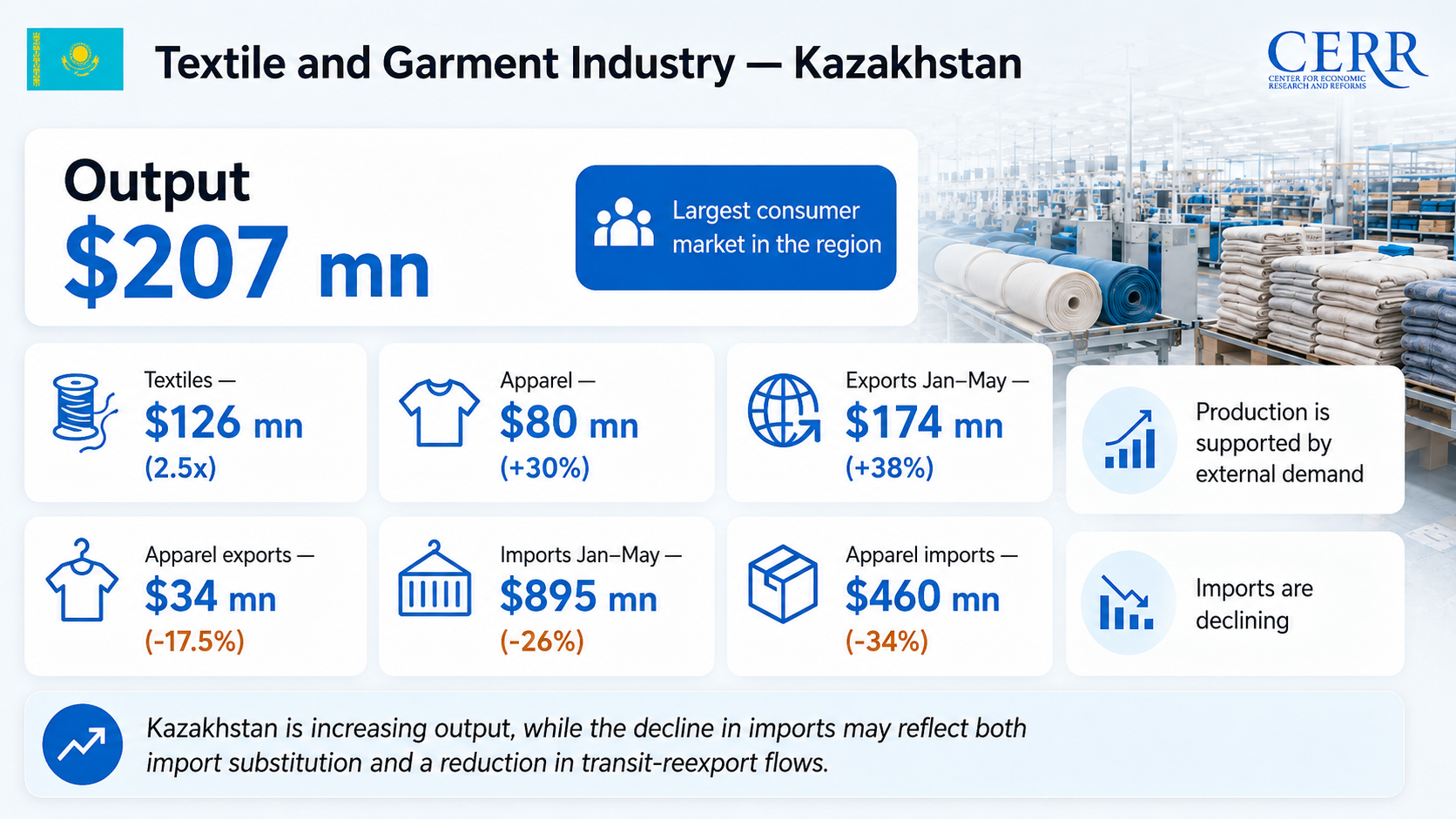
Textile and apparel output reached $207 million in H1. Textile production increased 2.5-fold to $126 million, while apparel production rose by 30% to $80 million.
Production has been strongly supported by external demand. In January–May 2026, exports of textiles and apparel increased by 38% to $174 million, although apparel exports declined by 17.5% to $34 million.
Alongside higher production, Kazakhstan has been actively reducing imports of textiles and apparel. In January–May, imports fell by 26% to $895 million, including a 34% decline in apparel imports to $460 million. The reduction may be associated not only with import substitution through domestic production but also with lower transit and re-export flows to neighboring countries, which may have previously been reflected in official trade statistics.
Kyrgyzstan’s garment industry faced significant difficulties in H1 2026. Output of apparel, the country’s leading light-industry segment, declined by 2.4% to $112 million, while textile production fell by almost 30%. Against this backdrop, the sector’s share in total industrial production decreased from 3.2% to 2.6%.
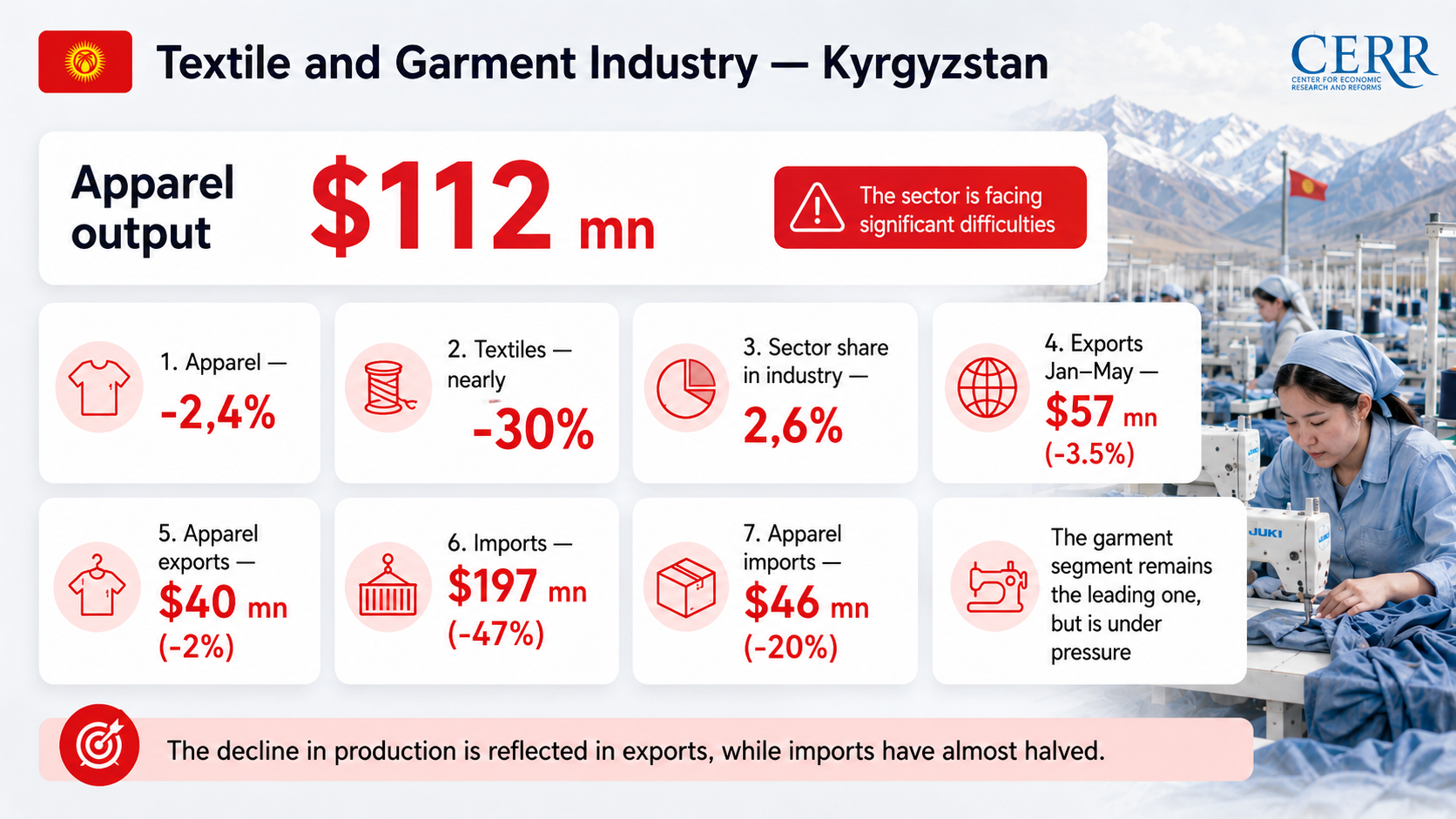
The decline in production was also reflected in exports. In January–May 2026, exports of textiles and apparel decreased by 3.5% to $57 million, including a 2% decline in apparel exports to $40 million.
Imports nearly halved, falling by 47% to $197 million, while apparel imports declined by 20% to $46 million.
In Tajikistan, textile production increased by 5.5% and apparel production by 3.9%. Combined textile and apparel output reached $122 million, with textiles accounting for almost 80%.
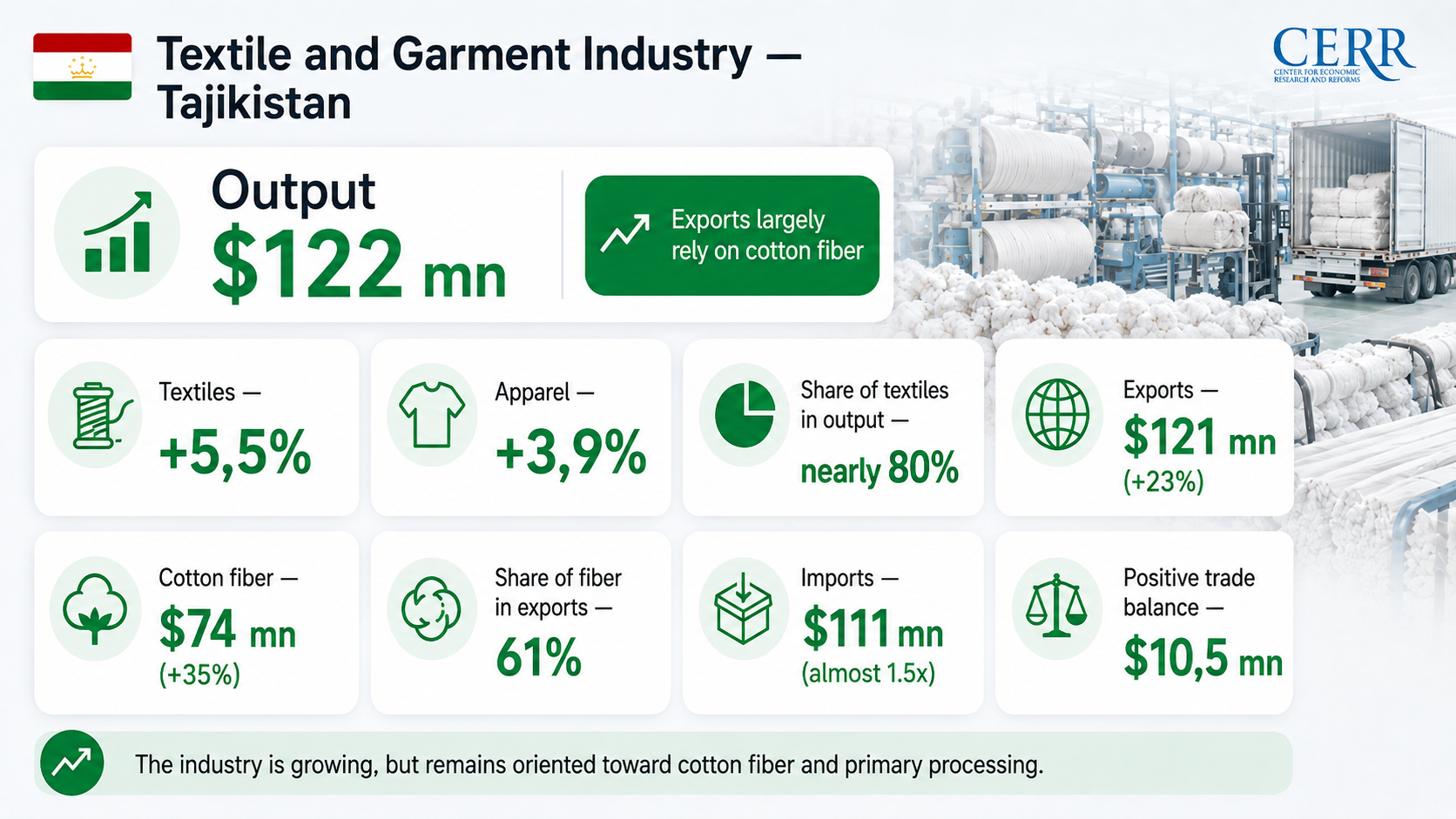
Exports of textile products increased by 23% to $121 million. The majority, 61%, consisted of cotton fiber exports, which rose by 35% to $74 million.
Textile imports increased by almost 1.5 times to $111 million. The trade surplus narrowed from $23.3 million to $10.5 million. The increase in imports may reflect stronger domestic demand as well as higher purchases of raw materials and inputs for further processing.
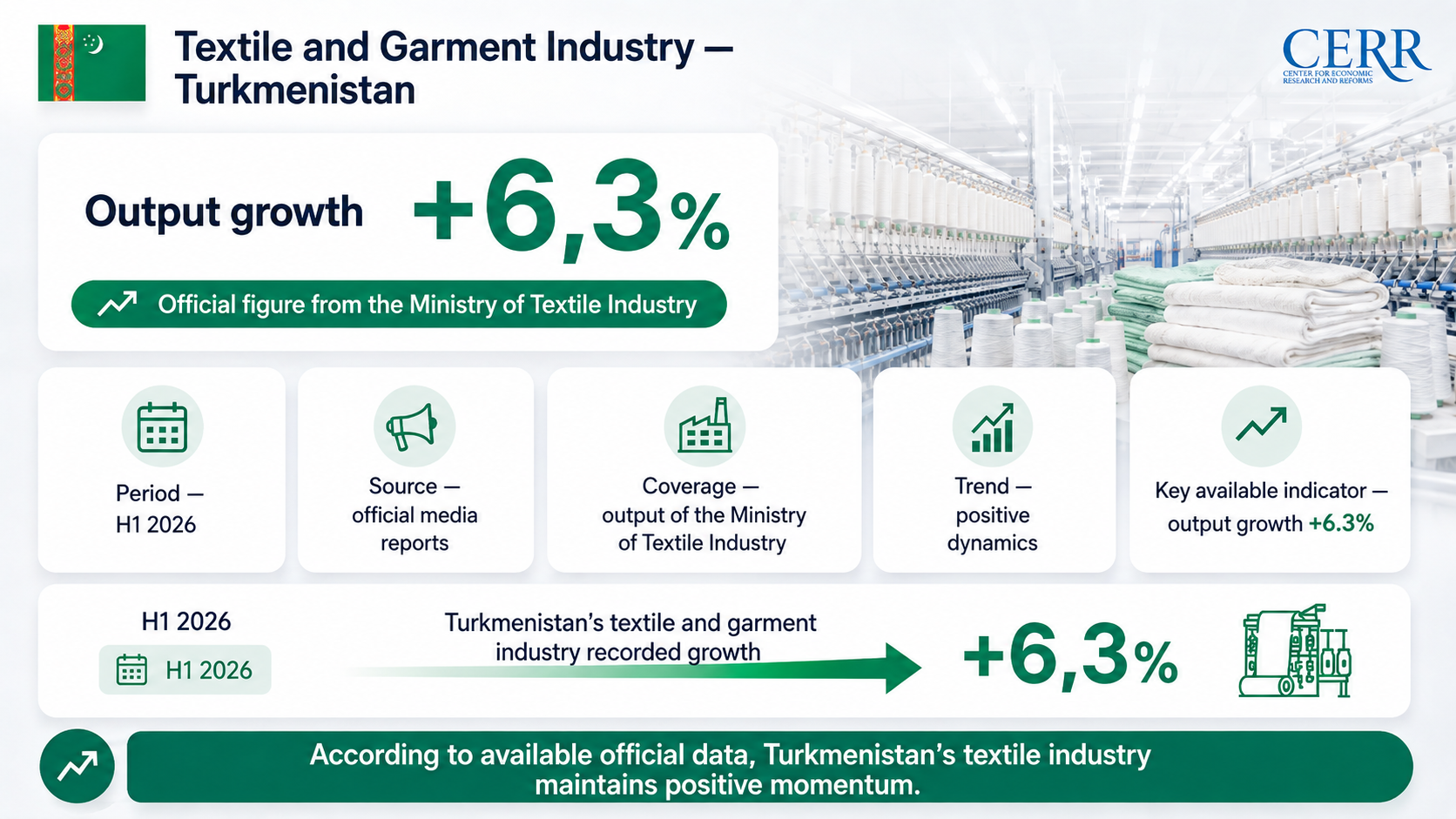
According to official media reports, output under Turkmenistan’s Ministry of Textile Industry increased by 6.3%.
External Market Conditions and the Central Asian Market
In H1 2026, conditions in global textile and apparel markets remained mixed. A gradual recovery in trade and manufacturing activity coincided with subdued demand for finished clothing, stronger price competition, and rising production costs. Trends differed considerably among the world’s leading exporting countries.
In January–June 2026, value added in China’s textile industry increased by 3.3%. Production maintained moderate positive growth, although it lagged behind overall growth in China’s large-scale industrial sector. Exports of textiles and apparel increased by 1.3% to $145 billion, while apparel exports declined by 1.2% to $69.8 billion.
Türkiye’s sector continued to face difficulties. In May, textile production increased by 4.6%, while apparel production declined by 12.5%. Textile and apparel exports in January–June 2026 amounted to $14.7 billion, down 1.9%, including a 1.8% decline in apparel exports to $7.8 billion.
Vietnam continued to demonstrate strong production growth. In January–June 2026, textile production increased by 10%, apparel production by 5.5%, and leather and footwear production by 104.0%. Export growth was modest at 0.9%, bringing exports to $18.9 billion.
In Russia, the largest producer of light-industry goods in the CIS, sector output declined by 3.2%. Textile production remained broadly at the previous year’s level, increasing by 0.3%, while apparel production decreased by 6.3%. In June, however, performance was stronger than the average for the first half of the year: textile production increased by 2.2% year-on-year and apparel production by 4.4%.
These developments directly affected Central Asian markets and enterprises by shaping demand for their products, the cost of imported raw materials and inputs, and competitive conditions. In particular, China reduced its exports of textiles and apparel to Central Asia by a quarter to $4.9 billion, including a 35% decline in apparel exports to $2.9 billion.
Türkiye’s exports to Central Asia also underwent a shift. Shipments to the region declined by 20% to $444 million. Textile and apparel exports to Kazakhstan and Kyrgyzstan decreased considerably, while exports to Uzbekistan, Tajikistan, and Turkmenistan increased.
Overall, such a sharp decline in supplies from major textile and apparel exporters to the Central Asian market may also be explained by a reduction in transit and re-export flows through countries in the region.
Conclusion
In H1 2026, Uzbekistan’s textile and garment industry generally delivered positive results. The indicators confirm the strengthening of its export potential and continued progress from raw-material exports toward shipments of processed and higher-value-added products. At the same time, growth in apparel production nearly stalled, while the textile segment continued to expand. If this trend persists, further export growth may eventually be constrained by the production capacity and productivity of garment manufacturers.
At the regional level, Uzbekistan remains Central Asia’s largest and most balanced textile and garment producer. Kazakhstan and Kyrgyzstan continue to depend heavily on imports, while Tajikistan remains dependent on exports of raw cotton and primary processed products. This creates opportunities for deeper regional cooperation and the development of complete value chains within Central Asia, from raw materials to finished products, while gradually strengthening the position of Central Asian textile and garment products in the regional market.
Ruslan Abaturov, CERR



leave a comment