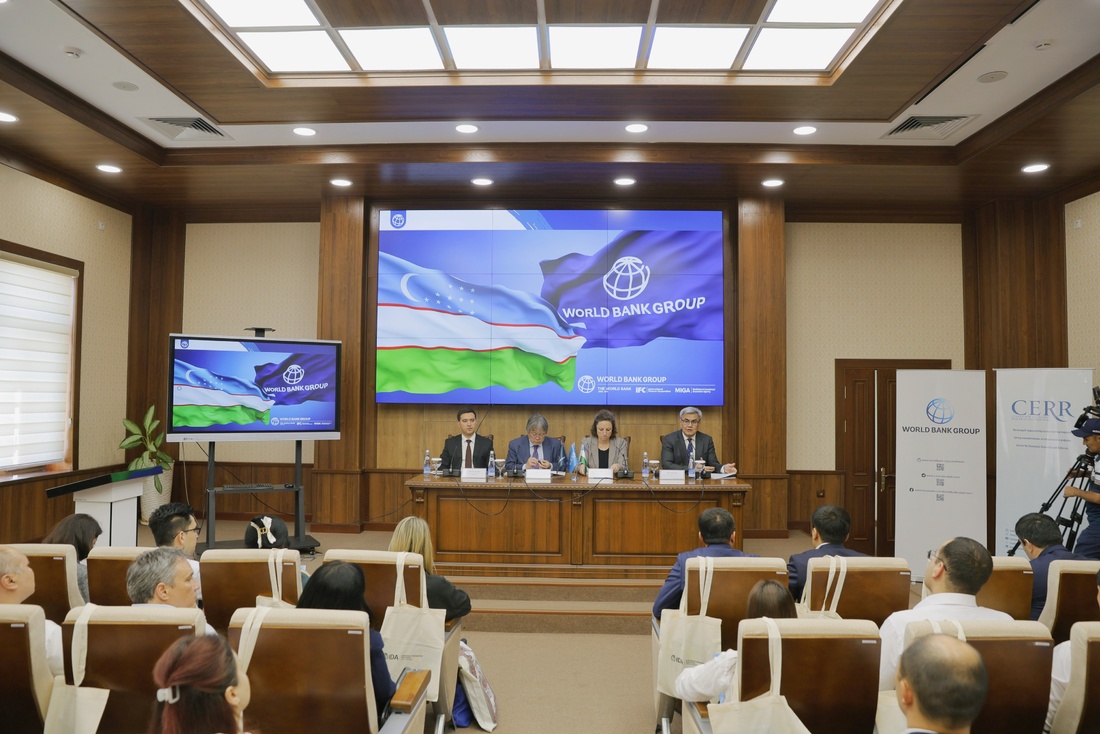
The Center for Economic Research and Reforms (CERR) hosted an international roundtable discussion titled “International Development Association: Supporting Sustainable Economic Growth in Uzbekistan and Globally.”
The event was jointly organized by the CERR and the World Bank Representative Office in Uzbekistan.
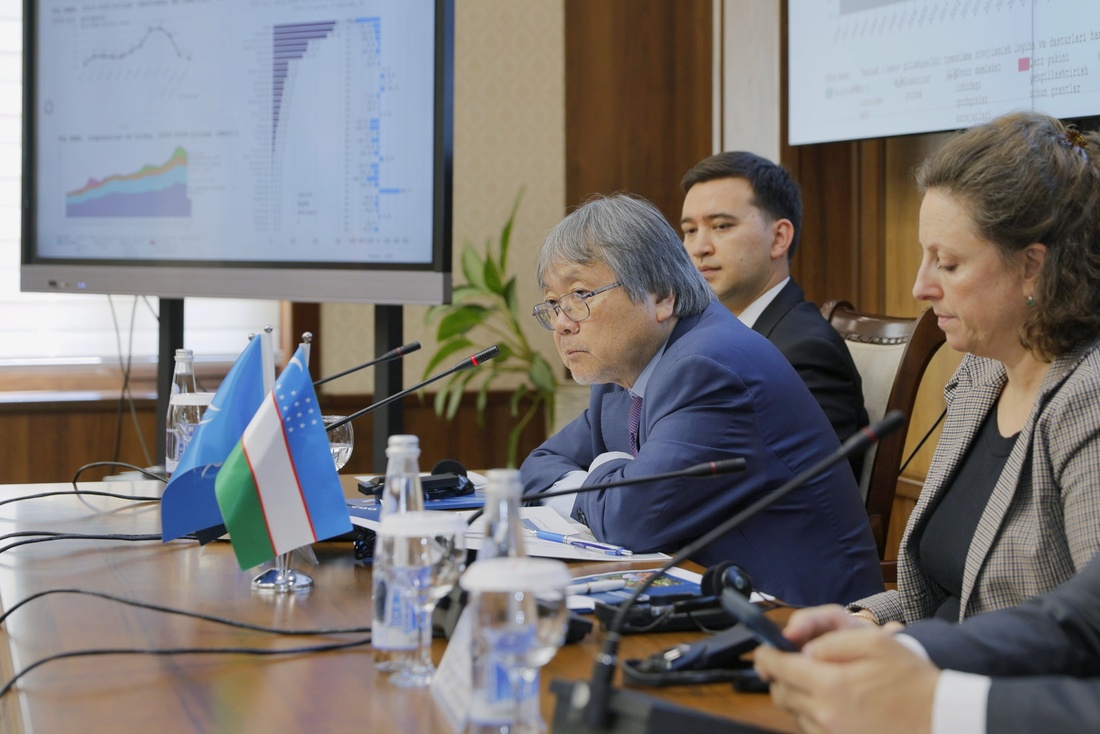
The roundtable brought together Obid Khakimov, Adviser to the President of the Republic of Uzbekistan on Economic Policy and Director of CERR; Akihiko Nishio, Vice President of Development Finance at the World Bank, who oversees the activities of the International Development Association (IDA); as well as representatives of the expert and academic community, diplomatic missions, and international organizations.
The event aimed to discuss the global role of the International Development Association, as well as the implementation and effectiveness of IDA-financed projects in Uzbekistan. Special attention was given to further support for economic, social, and infrastructure development programs.
The International Development Association, a member of the World Bank Group, is the world’s largest source of concessional financing for developing countries. Its $100 billion financing package for 2026–2028 is expected to support 1.9 billion people across 78 recipient countries.
Following the launch of large-scale reforms under the leadership of President Shavkat Mirziyoyev, Uzbekistan’s cooperation with international development institutions has reached a strategic level.
Over the past ten years, the portfolio of projects implemented in Uzbekistan with World Bank support across various sectors of the economy has tripled, rising from $1.8 billion in 2016 to $5.5 billion as of May 2026. More than 60% of this support has been allocated through IDA.
Welcoming the participants, Economic Policy Advisor to the President of Uzbekistan and CERR Director Obid Khakimov highlighted the high level of trust shown by international institutions and partner countries toward the reforms being implemented in the country.
“Since 2017, Uzbekistan’s cooperation with international development institutions has reached a fundamentally new level. During this period, the portfolio of projects implemented with World Bank support, including those financed through IDA, has more than tripled.
For us, it is important that alongside expanded financing, analytical support, assessment, and reform implementation assistance have become an integral part of our cooperation,” Obid Khakimov noted.
Speaking about the results, the CERR Director emphasized that Uzbekistan has achieved unprecedented progress in the country’s socio-economic development during the reform period.
“Uzbekistan’s GDP increased from $54 billion in 2017 to $147 billion in 2025, and is expected to reach $180 billion by the end of 2026. Over the reform period, the country’s economy will have expanded by more than threefold, making it one of the notable examples of accelerated economic development in international practice.
At the same time, the main outcome of the reforms has been the improvement in the lives of millions of people. During this period, the incomes of 8.5 million vulnerable citizens were increased. With the support of international organizations, a Unified Social Protection Registry was introduced in the country, while one of the most effective social policy measures was the launch of the Mahallabay system, which made social support more targeted and efficient,” Obid Khakimov noted.
World Bank Vice President of Development Finance Akihiko Nishio emphasized that Uzbekistan’s experience in cooperation with IDA has practical relevance for other developing countries.
“Uzbekistan’s development experience deserves close attention. As a result of socio-economic reforms, including those implemented with IDA support, the country has undergone a major transformation in recent years, affecting the lives of millions of citizens.
Since 2017, average annual real GDP growth has reached 6.8%. According to our estimates, Uzbekistan ranks among the fastest-growingdeveloping economies in the Europe and Central Asia region. At the same time, the national poverty rate declined from 17% in 2021 to 5.8% in 2025, helping around 3.7 million people move out of poverty,” said Akihiko Nishio.
Uzbekistan’s partnership with the World Bank over the past 35 years has supported key stages of the country’s development. Cooperation through IDA has played an especially important practical role. Today, Uzbekistan ranks among the top three recipients of World Bank financing in the Europe and Central Asia region.
The current World Bank program in Uzbekistan includes 27 projects with a total value of about $5.5 billion. Three-quarters of this amount, or over $4 billion, is allocated to strengthening macroeconomic stability, supporting agricultural adaptation, transforming the energy sector, and improving water security.
During the roundtable, participants discussed the impact of concessional financing on the implementation of socio-economic development programs, as well as prospects for continued support for reforms. It was noted that at the next stage, maintaining the practical nature of the partnership and directing resources toward sectors with the highest impact will be essential.
The energy sector was highlighted as one example of practical cooperation. According to World Bank estimates, IDA commitments in the sector increased more than sixfold, from $177 million at the end of 2016 to $1.1 billion by the end of 2025. This increase in resources is particularly important given ongoing energy reforms related to the transition toward market-based pricing and the creation of conditions for the energy transition.
An important outcome of the event was the announcement of an international IDA conference to be held in Tashkent in December this year. The conference is expected to bring together representatives from around 100 countries, including both IDA recipient and donor countries, as well as international development partners.
For Uzbekistan, hosting the conference provides an opportunity to present its own reform experience and contribute to the global dialogue on development.
Amid rising debt pressures, climate risks, and economic uncertainty, the conference will serve as a platform to discuss the role of concessional financing in ensuring sustainable growth, reducing poverty, and supporting development programs in partner countries. Participants will also exchange practical approaches to addressing development challenges.




leave a comment