The Center for Economic Research and Reforms (CERR) presented the results of its analysis of Uzbekistan’s business climate, based on monthly surveys of entrepreneurs across the country.
Based on the survey data, a composite Business Climate Indicator was calculated, reflecting assessments of the current state of business and expectations for the next three months.
Dynamics of Uzbekistan’s Composite Business Climate Indicator
In July, the composite Business Climate Index stood at 56 points, 5 points higher than in the same period last year.
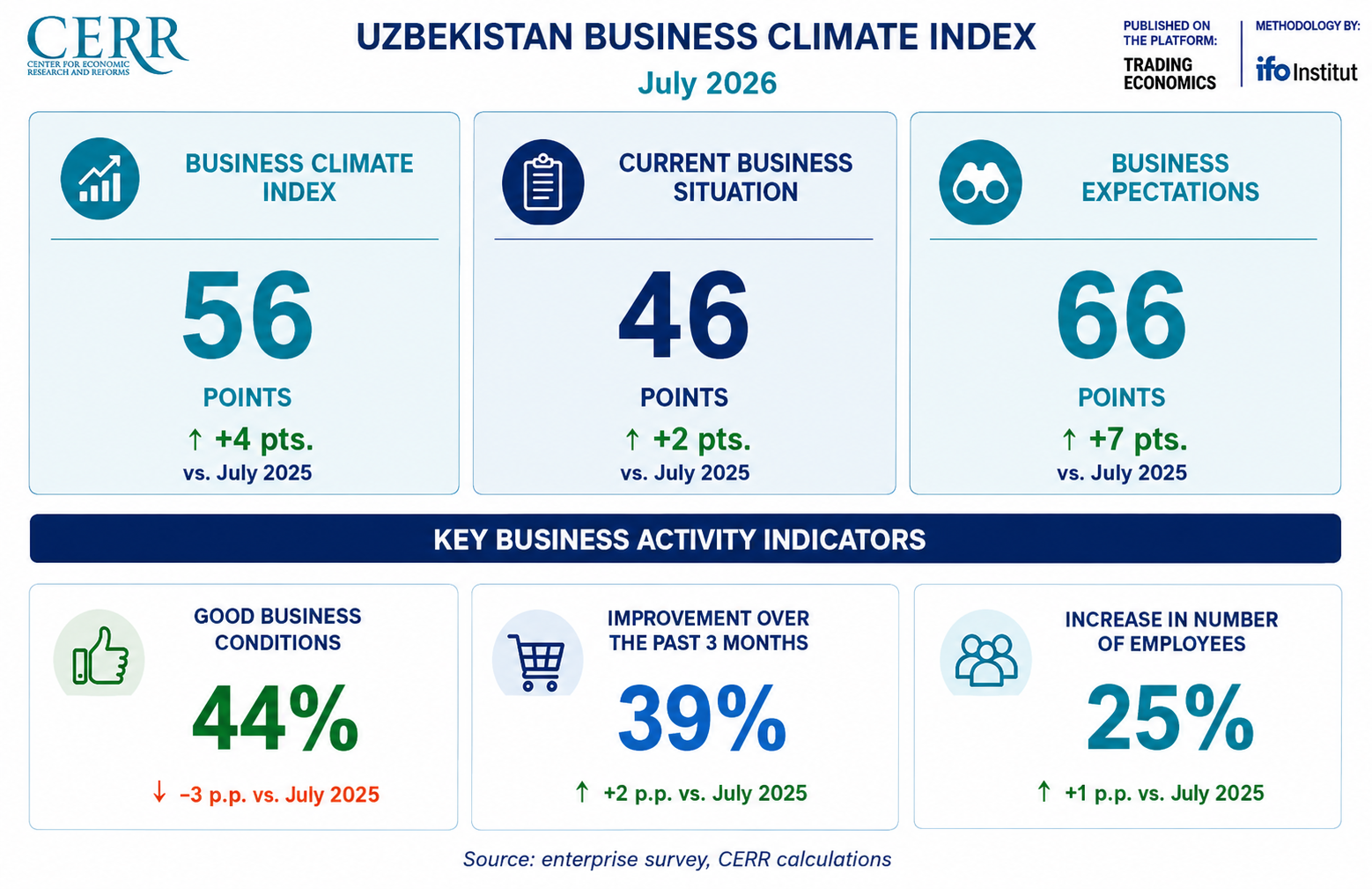
An index value above 50 points indicates that optimistic assessments prevail in the business environment.
According to the assessments, the Current Business Conditions Index increased by 2 points to 46 points, while the Expectations Index reached 66 points, up 7 points compared with last year.
The business situation over the past three months improved for four out of ten entrepreneurs (39%).
Nearly half of respondents assessed the current state of their business as “good” (44%), while one in four enterprises reported an increase in the number of employees over the past three months (25%).
More than two-thirds of entrepreneurs (68%) expect demand for their products to increase over the next three months.
Sectoral Dynamics of the Business Climate Index
Compared with last year, the Business Climate Index increased in agriculture, construction, and services, while some decline was recorded in industry.
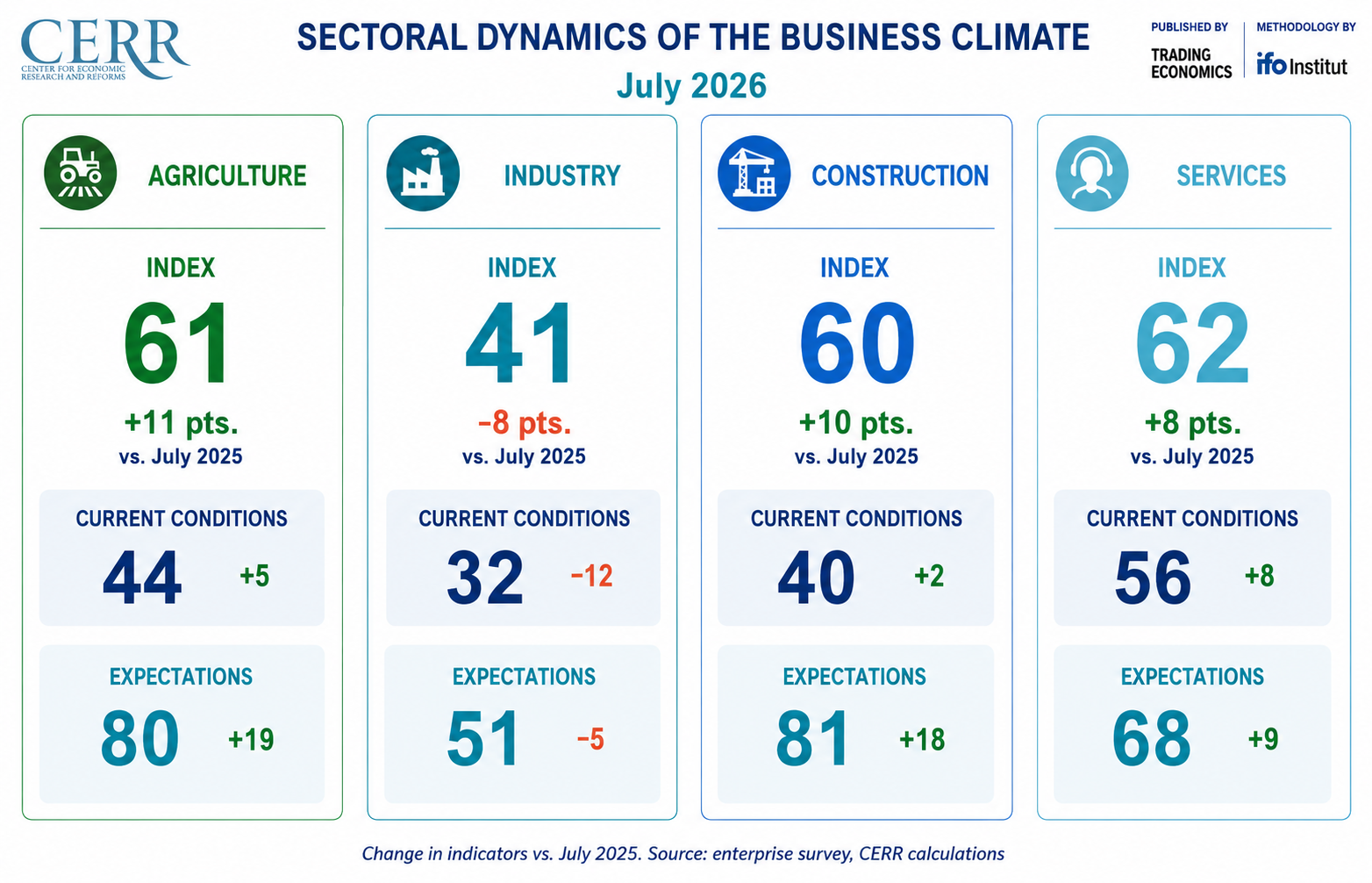
In agriculture, the composite Business Climate Indicator increased by 11 points compared with last year, reaching 61 points. Both current assessments (+5 points) and business expectations (+19 points) improved in the agricultural sector.
An improvement in the situation over the past three months was reported by 43% of entrepreneurs (41% in 2025), while 43% (43%) reported an increase in demand for their products.
In construction, the composite Business Climate Indicator improved significantly, rising by 10 points year-on-year to 60 points. Both current assessments (+2 points) and business expectations (+18 points) improved in the sector.
Over the past three months, the current situation in construction improved for four out of ten enterprises (42%, unchanged from 2025). An increase in demand was reported by nearly half of construction companies (46%), compared with (44%) last year.
The composite Business Climate Indicator in industry stood at 41 points (-8 points). The decline was driven by assessments of the current situation in the sector (32 points), while expectations remained relatively high (51 points).
Expectations regarding employment over the next three months became more moderate. Nearly every second industrial enterprise expects to increase the number of employees (46%). At the same time, assessments of the outlook for business conditions remain positive. Two-thirds of respondents (66%) expect an improvement over the next three months.
In the services sector, the composite Business Climate Indicator improved significantly (+8 points), remaining in positive territory at (62 points). The change was driven by improvements in both current business assessments (+8 points) and expectations for business development over the next three months (+9 points).
Nearly half of services companies assess their current business conditions as good (48%). Expectations for the next three months became more confident (+3 percentage points), with almost three-quarters of enterprises (74%) forecasting an improvement. The share of companies reporting an improvement in their business conditions over the past three months also increased (+3 percentage points) to 40%.
Barriers to Doing Business Are Declining
More than half of entrepreneurs (59%) reported facing no barriers to doing business. The most favorable situation was recorded in construction (71%) and services (62%). In agriculture (55%) and industry (45%), nearly every second entrepreneur reported facing no barriers.
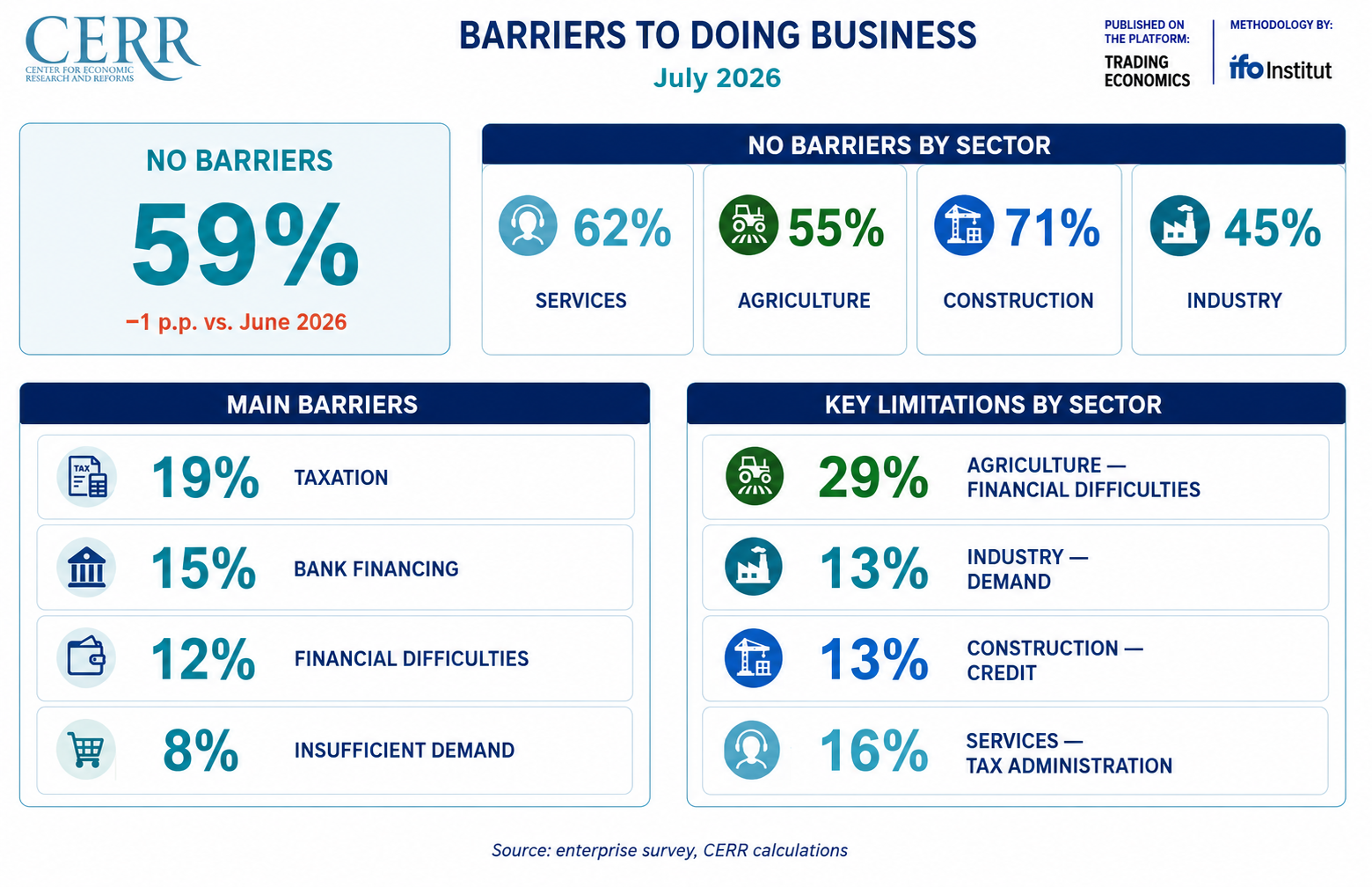
Among the factors constraining entrepreneurial activity, respondents most frequently cited taxation issues (19%), access to bank financing (15%), other financial difficulties (12%), and insufficient demand (8%). The share of entrepreneurs reporting various financial difficulties increased most noticeably, by 4 percentage points.
By sector, nearly one in three entrepreneurs in agriculture reported financial difficulties (29%, +16 percentage points). In construction, difficulties in obtaining loans were cited more frequently (13%, +13 percentage points). In industry, the share of enterprises facing insufficient demand increased (13%, +4 percentage points), while in the services sector, tax administration remained the main constraint (16%).
CERR Sector for Industry Competitiveness and Investment Activity Studies
Tel.: (78) 150 02 02 (441)
CERR Public Relations and Media Sector
Tel.: (78) 150 02 02 (417)



leave a comment