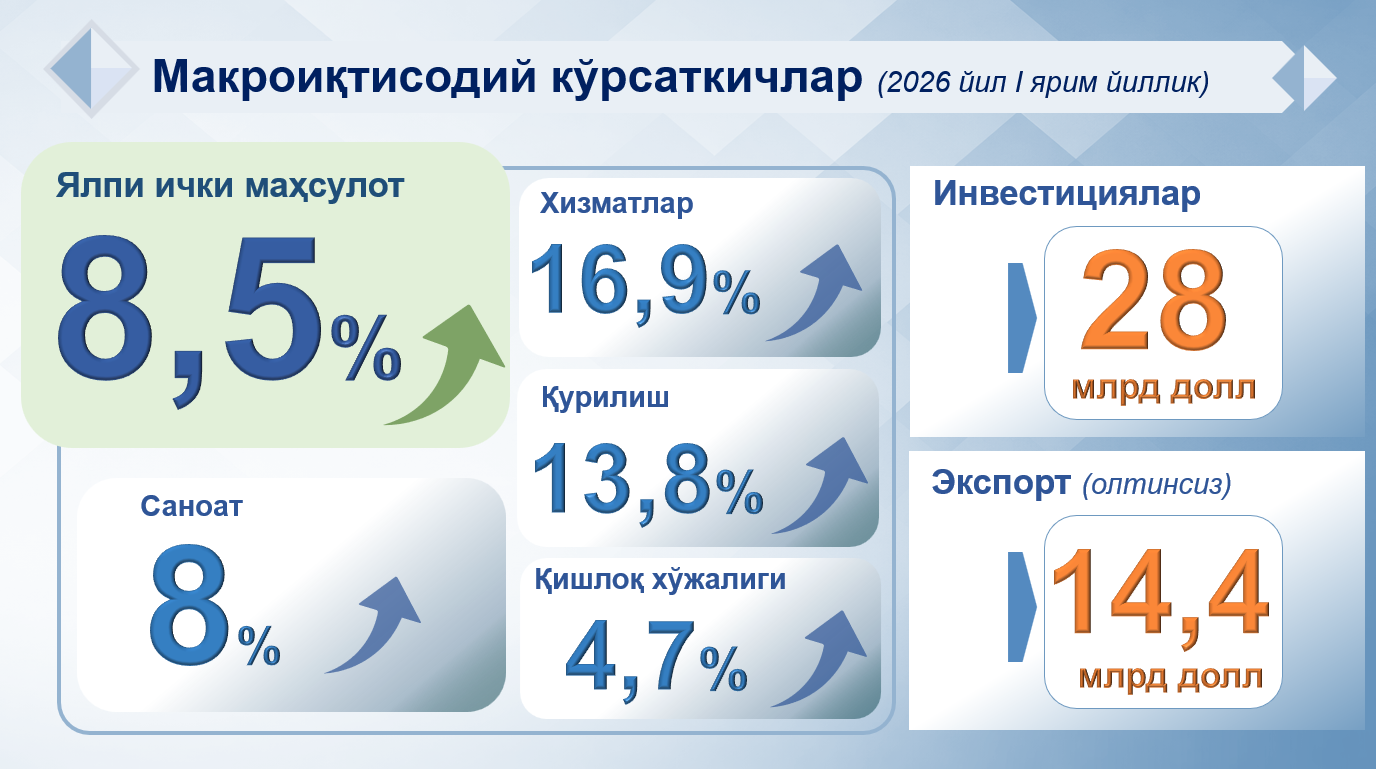
Yil boshidan mamlakat iqtisodiyoti 8,5 foizga o‘sdi. Sanoatda o‘sish 8 foizni, xizmatlar sohasida 16,9 foizni, qurilishda 13,8 foizni, qishloq xo‘jaligida 4,7 foizni tashkil etdi. Investitsiyalar hajmi $28 mlrdga, eksport esa $14,4 mlrdga yetdi. «Fitch» va «Moody’s» xalqaro reyting agentliklari O‘zbekistonning suveren kredit reytingini oshirdi.
Aholisi 40 mlnga yetgan mamlakatda turmush sifatini yanada yaxshilash uchun iqtisodiy o‘sishni 9–10 foiz darajasida ta’minlash zarurligi qayd etildi. Tarmoq va hududlar rahbarlariga mavjud zaxiralarni to‘liq ishga solish, har bir loyihani amalga oshirish va korxonalar faoliyati samaradorligini oshirish topshirildi.
Mahallalarni rivojlantirish masalalariga alohida e’tibor qaratiladi. Eng murakkab 2 mingta mahallada «zarbdor qirq kunlik» e’lon qilindi. Hokimlar elektr, gaz va suv ta’minoti, yo‘llarni ta’mirlash, bandlikni ta’minlash hamda tadbirkorlikni qo‘llab-quvvatlash bilan bog‘liq masalalarning o‘z vaqtida hal etilishi uchun shaxsan javobgar bo‘ladi. Bandlik organlari fuqarolarni talab yuqori bo‘lgan kasblarga manzilli o‘qitish, ularni ishga joylashtirish va daromadlarini oshirish bo‘yicha ishlarni tashkil etadi.
Yig‘ilishda ishbilarmonlik muhitini yaxshilash chora-tadbirlari ham ko‘rib chiqildi. Qayd etilganidek, 51 ta vazirlik va idora 322 ta yo‘nalish bo‘yicha moliyaviy sanksiyalar qo‘llash vakolatiga ega bo‘lib, 2024–2026 yillarda jarimalarning umumiy hajmi qariyb 3 trln so‘mni tashkil etdi. Ortiqcha byurokratik tartib-taomillar, jarimalar, to‘lovlar va yig‘imlarni qisqartirish, shuningdek, tadbirkorlarga ko‘maklashish va tushuntirishga qaratilgan yondashuvni joriy etish vazifasi qo‘yildi.
Strategik korxonalar samaradorligini oshirish, mahsulot tannarxini pasaytirish va energetikadagi yo‘qotishlarni kamaytirish masalalari ham muhokama qilindi. Elektr energiyasi va tabiiy gaz taqsimotini yaxshilash, yirik kompaniyalarning bozor qiymatini oshirish, ularni IPOga tayyorlashni jadallashtirish hamda investitsiyaviy jozibadorligini kuchaytirish topshirildi.
Faoliyati to‘xtab qolgan korxonalar ishini tiklash bo‘yicha choralar belgilandi. To‘qimachilik tarmog‘ida ishga solinmagan quvvatlar tufayli 5 trln so‘mlik mahsulot ishlab chiqarish va $400 mlnlik eksport imkoniyati boy berilmoqda. Mas’ullarga har bir faoliyat yuritmayotgan korxonadagi vaziyatni tahlil qilib, ishlab chiqarishni qayta tiklash choralarini ko‘rish topshirildi.
Yangi xususiylashtirish dasturi doirasida umumiy qiymati 100 trln so‘m bo‘lgan ko‘chmas mulk ob’yektlari, yer uchastkalari va davlat ulushlari savdoga chiqariladi. Davlat aktivlarini sotib oluvchi tadbirkorlar uchun to‘lov shartlarini yengillashtirish nazarda tutilmoqda.
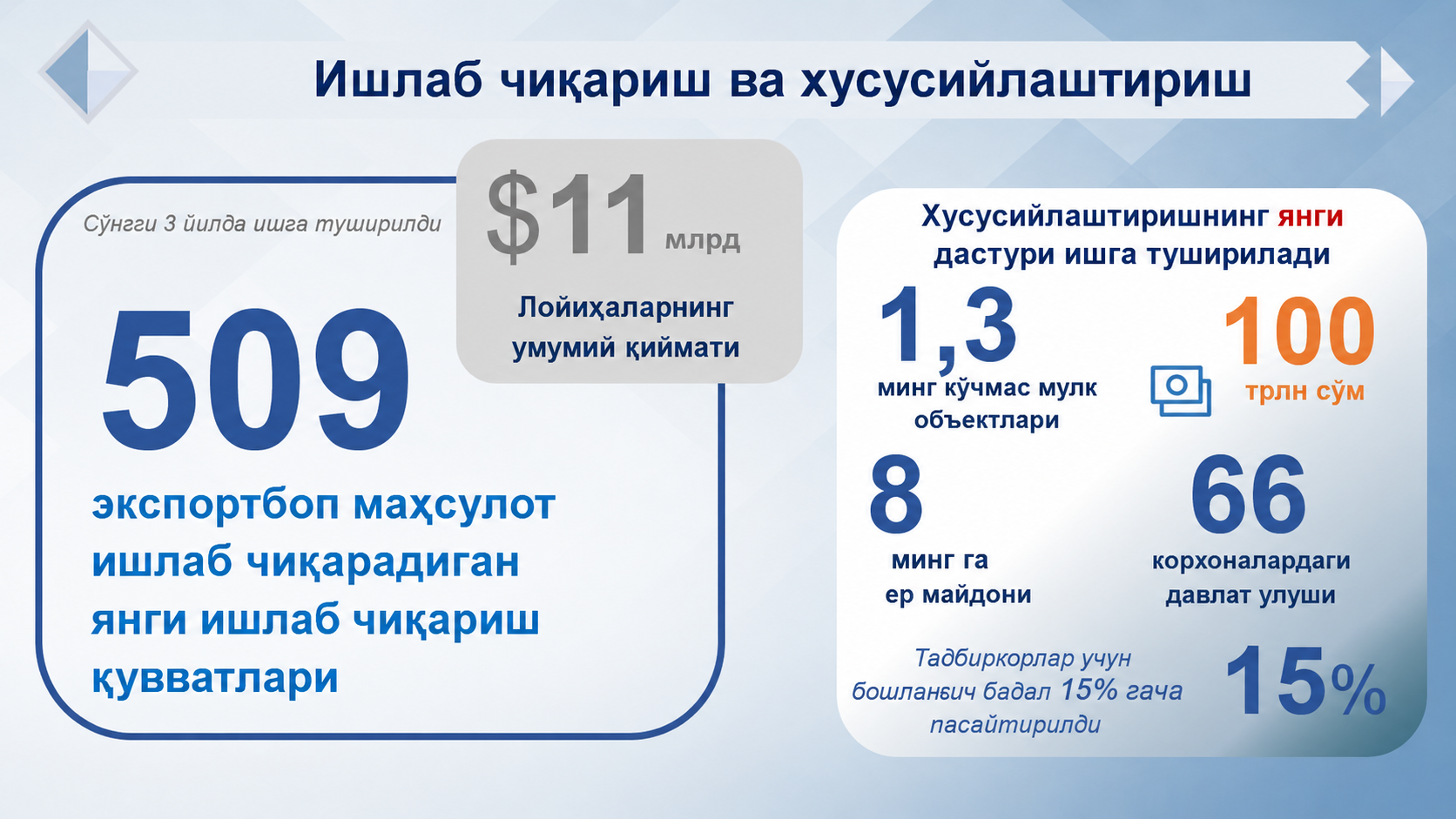
Eksportni kengaytirishga ham urg‘u berildi. So‘nggi uch yilda qiymati $11 mlrd bo‘lgan 509 ta eksportbop ishlab chiqarish quvvati ishga tushirildi, ammo ularning 208 tasi hali tashqi bozorlarga chiqmagan. Ushbu korxonalar mahsulotining atigi 30–40 foizi eksportga yo‘naltirilsa, qo‘shimcha $1,5–2 mlrd valyuta tushumini ta’minlash mumkin. Korxonalar va maxsus iqtisodiy zonalarga sertifikatlash, aylanma mablag‘lar, bozor topish va logistika masalalarida ko‘mak ko‘rsatuvchi tezkor guruhlar tuziladi.
Milliy brendlarni xorijda ilgari surish, ularni demping va kontrafakt mahsulotlardan himoya qilish bo‘yicha alohida dastur ishlab chiqish topshirildi. Shuningdek, temir yo‘l infratuzilmasini rivojlantirish, qo‘shimcha harakatlanuvchi tarkib jalb qilish va Jahon bankining $200 mln mablag‘ini jalb etish bo‘yicha choralar ko‘riladi.
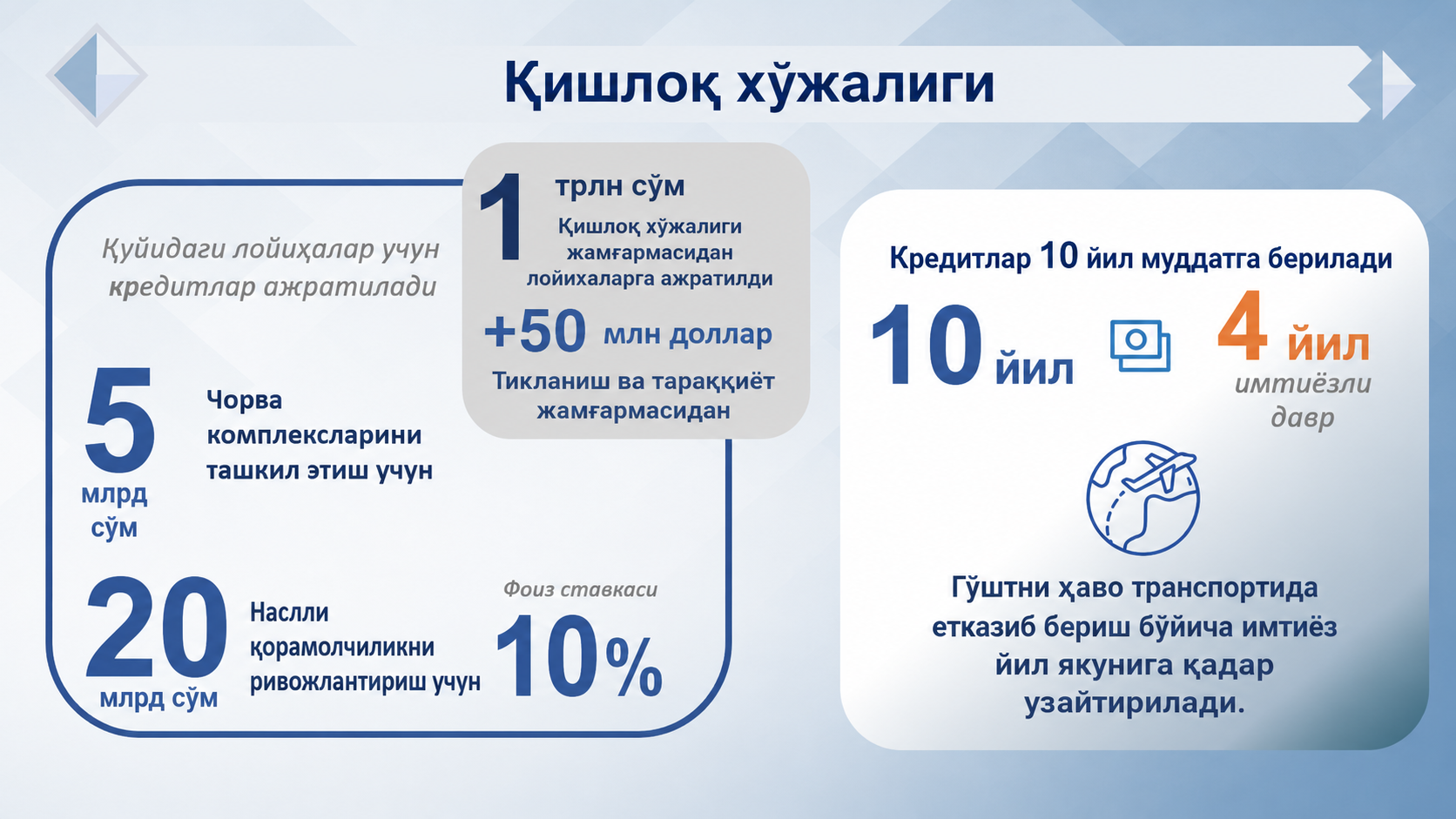
Oziq-ovqat xavfsizligi sohasida chorvachilikni qo‘llab-quvvatlash, meva-sabzavot va kartoshka zaxiralarini shakllantirish vazifalari belgilandi. Yil oxirigacha 100 ming bosh qoramol, 150 ming bosh qo‘y va echki import qilish, shuningdek, umumiy sig‘imi 87 ming tonna bo‘lgan 340 ta sovutkichli omborni ishga tushirish rejalashtirilgan.
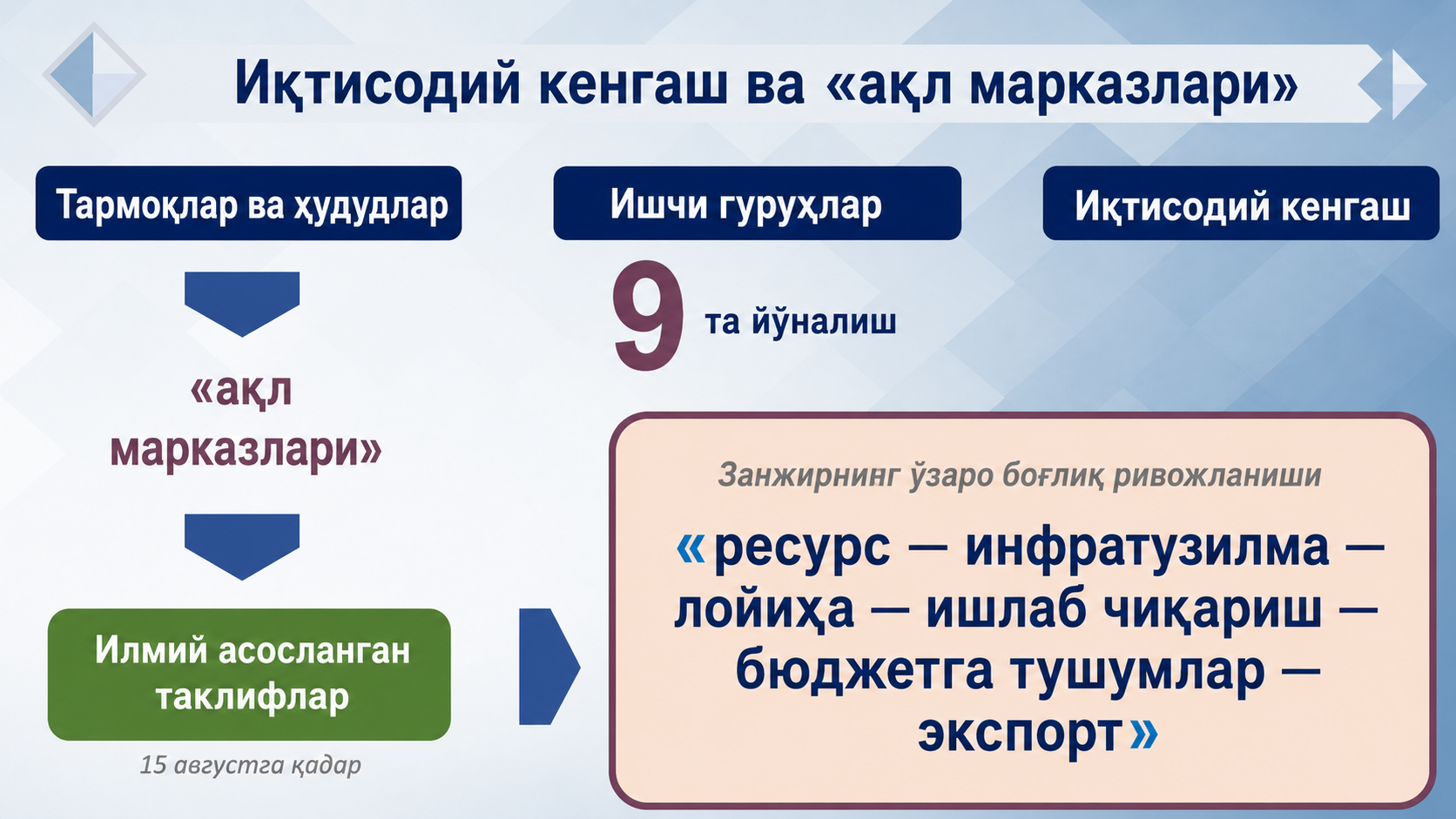
Jahon iqtisodiyotidagi noaniqlik saqlanib qolayotganini hisobga olgan holda, 15 avgustga qadar tarmoq va hududlarga biriktirilgan «aql markazlari» bilan birgalikda ilmiy asoslangan takliflar tayyorlanadi. Ular «resurs — infratuzilma — loyiha — ishlab chiqarish — byudjetga tushum — eksport» zanjirini to‘liq qamrab oladi. Shu asosda 2027 yil uchun makroiqtisodiy parametrlar, byudjet, investitsiya va eksport dasturlari mobilizatsion ssenariy asosida shakllantiriladi.



Izoh qoldirish